



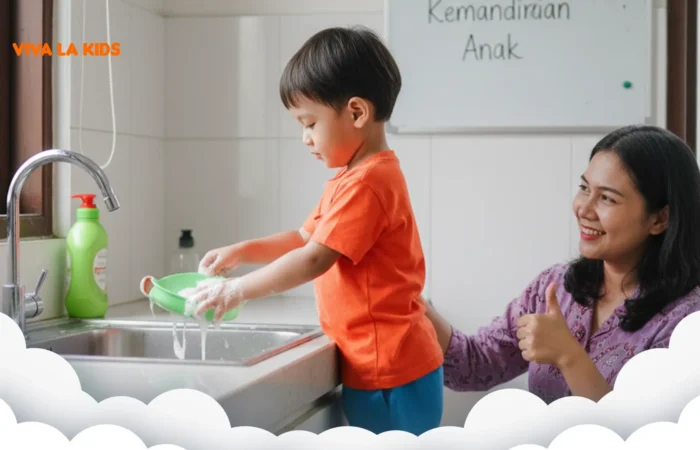
Child Independence Checklist: Teach Good Habits Early On – Confused about how to teach your child independence from an early age? The development of a nation’s civilization is always rooted in how its young generation is prepared to become independent and reliable individuals.
In the discourse of national education, this issue is related to the goal of creating a generation of AIH or Anak Indonesia Hebat (Great Indonesian Children).
Among the tips that parents can apply to foster independence in line with the AIH concept is to use the scaffolding technique and checklist described below.
But first, let’s discuss briefly the importance of independence in the Anak Indonesia Hebat concept.
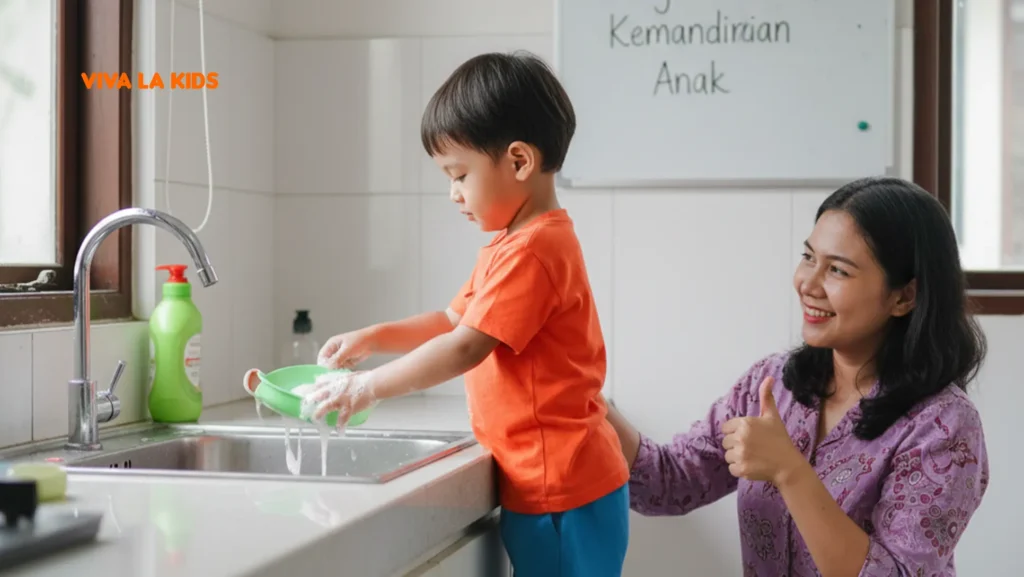
Independence as One of the Criteria for Great Indonesian Children
Independence within the framework of Anak Indonesia Hebat (Great Indonesian Children) is positioned as a pillar that connects physical health with mental resilience.
Based on the vision of the Character Strengthening Center, great children are those who are able to become lifelong learners with global competencies.
The daily implementation of this independence is explicitly reflected in the 7 Habits of Great Indonesian Children Movement, which covers the rhythm of life from waking up to going back to sleep, namely:
- Wake up early to practice time management and self-discipline without coercion.
- Worship to build moral and spiritual independence based on values of faith.
- Exercise as a form of personal responsibility for physical health.
- Eat nutritious food to foster independent awareness of choosing the best nutrition for the body.
- Be eager to learn to encourage autonomous exploration of knowledge and creativity.
- Socialize to practice social adaptation and active contribution to the environment.
- Go to bed early as a form of self-regulation for rest needs.

How to Teach Children Independence?
Teaching independence to young children is an art that is both easy and difficult. One of the most recognized methods in developmental psychology is the scaffolding approach, or the provision of gradual support.
This concept is based on the idea that children can achieve higher levels of ability when given the minimum necessary assistance, which is then gradually reduced.
Scaffolding can be applied in three main ways, namely:
Verbal Scaffolding
This is done by giving brief instructions to the child or asking provocative questions. For example, first ask the child to tidy up their bed regularly.
After a few days, prompt the child with a question, “After waking up, what should you do, dear?”
Visual Scaffolding
Parents can use posters containing schedules to provide guidance for daily activities.
First, encourage children to follow the schedule on the poster. Next, once children have become accustomed to it, remind them only as needed.
Physical Scaffolding
This technique involves gradually reducing physical assistance. For example, guiding your child to perform wudu in the morning. After a while, let them perform wudhu on their own without parental assistance.
Activity Checklist as a Way to Train Children’s Independence
To make it easier for parents to implement this habit, here is a guide to daily activities that can be combined with the scaffolding approach above.
Morning Activities
- Wake up on time in the morning.
- Perform religious rituals according to your beliefs.
- Do stretching or light exercise with your family.
- Clean yourself independently.
- Choose and put on your own clothes and shoes.
- Eat a healthy breakfast neatly without being fed.
Read Also : Psychological Risks of Military Education for Children: Recognizing Potential Trauma and Mental Health Issues
Daytime and Evening Activities
- Put toys and learning materials back in their place after use.
- Help with light household chores, such as watering plants.
- Read books or do creative activities on your own initiative.
- Interact politely with neighbors or friends while playing.
Night Activities
- Prepare your bag and supplies for tomorrow’s activities independently.
- Clean yourself before going to bed.
- Go to your room and dare to sleep on time according to the agreed schedule.

No Comment! Be the first one.