




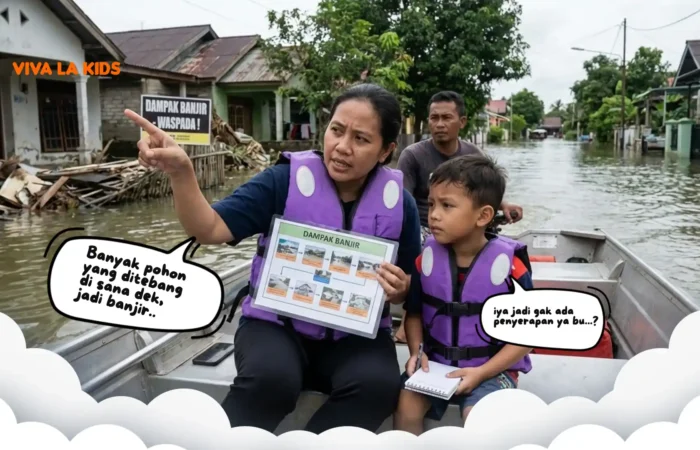
5 Tips for Parents to Teach Children About Flood Emergency Response – Rainfall intensity has increased at the end of this year. In fact, some areas have been directly affected by disasters. These include cold lava floods caused by volcanoes, landslides, and flash floods. While it is impossible to predict all disasters with precision, we can be vigilant to minimize losses and casualties.
Especially in disaster-prone areas. Children in these areas also need guidance and education to teach them how to respond to flood emergencies. Read the review below for more detailed information!

The Importance of Educating Children on Flood Emergency Response
Emergency response is a quick response that can be taken in critical situations. Its main purpose is to protect the safety of oneself and others. Furthermore, this action can also minimize the risk of loss. Here are some effective ways to teach children the importance of emergency response:
1. Introduce Children to the Concept of Flood Disasters through Interactive Communication
First, provide general knowledge about what a flood disaster is. Use simple and informative words. Supplement this with several concrete examples that you can recount. In addition, provide visualizations in the form of images or videos that depict the occurrence of a flood. However, keep in mind not to show visuals that are too extreme.
Instead of educating children, they may feel frightened or even traumatized. Present educational videos that are easy to understand. For example, how to take shelter in a safe place or go to higher ground in the event of a flood disaster.
2. Involve Children in Concrete Disaster Prevention Actions
With general information about flooding, children will learn what causes this disaster. The next step is to involve children in prevention efforts. These include planting trees, not littering in rivers, cleaning waterways, and making first aid kits to contribute positively.
This way, children will feel proud and play a role in disaster relief. Although it may seem simple, this can foster responsibility and quick response in the event of an undesirable situation.
3. Focus on Solutions, not Fear of Threats
Provide positive values so that children do not feel afraid. For example, tell them that “there is always a safe place during floods, which is to move to higher ground.” Also teach them to store their valuables in a safe place. Do not make threats that will only make children feel afraid and frustrated.
Avoid using words or media that are too provocative. Engage children in interaction by responding to their questions. You can patiently explain to them how much they understand about the importance of emergency disaster response. Be optimistic to give them confidence, not fear.
4. Utilize Creative Activities as Educational Tools
Children tend to enjoy fun activities. They easily absorb information through play. Incorporate creative activities to educate them about flood disaster response. A simple thing you can teach them is to conduct an evacuation drill.
Read more : Floods in Sumatra and Building Disaster Awareness in Children from an Early Age
Like finding the nearest exit during a flood or finding a safe place inside the house. Include some inspiring characters in the story. With attractive visuals, children will be more enthusiastic. This is an effective medium for providing early knowledge. Teach them to take an active role in emergencies and when help is needed.