





How to Deal with Common Childhood Issues – There are so many issues that arise in early childhood, and the role of parents in addressing them is crucial. As children enter their formative years, they typically begin to explore their emotions and encounter new experiences. This often leads to a wide range of behavioral and emotional responses.
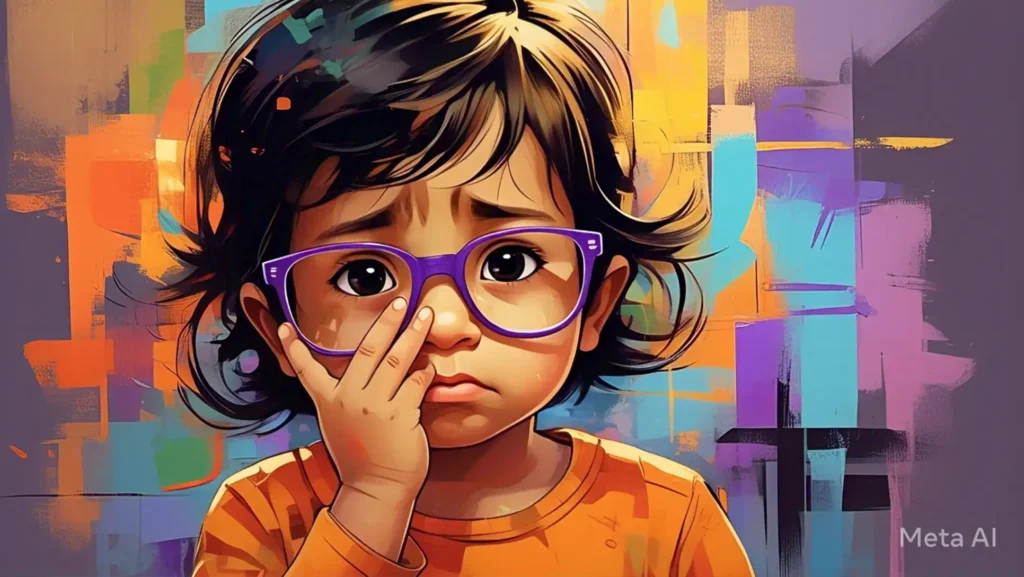
Behavioral and emotional issues are quite common, especially among children entering early childhood education.
As they develop, young children often face challenges that can be difficult for parents and teachers to address.
5 Common Childhood Issues and Tips for Dealing with Them
For parents or early childhood educators who encounter situations like this.
Below are some examples of common issues and tips for addressing them.
1. Difficulty Controlling Emotions
Children in early childhood education are usually just beginning to recognize emotions and new experiences.
However, they are not yet fully capable of expressing those emotions appropriately.
For example, young children may seek attention by crying as loudly as possible—a behavior often referred to as a tantrum.
Parents and teachers who deal with young children who cannot yet control their emotions naturally feel confused.
But there’s no need to worry, as they can calm the child using simple methods.
For instance, by teaching emotional regulation techniques like breathing slowly or offering alternative ways for the child to express their feelings.
2. Communication Difficulties
It is not uncommon to encounter children in early childhood education who have difficulty speaking or expressing themselves.
Addressing this issue requires a slow and gradual approach.
During their free time, parents may need to engage their children in conversation more often so that they can express their feelings.
At school, teachers can also encourage children to speak by reading books together or playing games that involve simple conversations.
This method is one of the most effective ways to stimulate a child’s communication skills.
3. Difficulty Socializing
When entering early childhood education, some teachers encounter children who have difficulty socializing with their peers.
This may be because parents at home do not encourage their children to play with their friends.
As a result, when faced with an external environment, these children struggle to socialize.
As educators, particularly in early childhood education, this issue can be addressed by giving children opportunities to play with their peers and encouraging them to participate in group activities.
4. Low motivation to learn
Not all children have a strong interest in learning. This may be due to school lessons that are uninteresting, exhausting, and extremely boring.
This is perfectly normal, as children in early childhood education prefer activities that are fun.
To address low interest in learning, teachers and parents must make the learning process enjoyable.
Therefore, the creativity of teachers and parents is essential here.
Read Also: Children Grow Up Healthy Through Child-Friendly Parenting
5. Difficulty concentrating
A common issue among young children is their difficulty focusing on learning activities.
This can be caused by an unsupportive learning environment, inappropriate teaching methods, stress, a lack of interest in the material being presented, or even physical health issues.
To address this issue, educators and parents can use interactive and varied teaching methods.
For example, by engaging in educational games or storytelling with engaging illustrations.
No Comment! Be the first one.