





A Brief Overview of the Theory of Parental Mediation – The term “Parental Mediation” (Parental Guidance) first emerged in the context of television, which in the 1990s was a medium that dominated people’s lives, particularly those of children at the time.
Parental Mediation is defined as the behavior of parents in managing and regulating their children’s media consumption.
Parental Mediation serves as a parental strategy to guide children’s media use in order to maximize positive impacts and minimize negative impacts of media and technology, particularly on children and adolescents.
Key Aspects of Parental Mediation Theory
There are three types and key aspects, namely:
1. Mediasi Aktif
A type of active mediation/guidance that focuses on parents’ behavior in explaining and discussing media content with their children.
Parents actively initiate discussions about the media content their children consume.
2. Restricitve Mediation
This refers to parents’ behavior in managing and regulating their children’s media use by setting limits on media consumption, such as establishing time limits, duration, content, location, and so on.
Some parents practice this type of mediation by restricting access to certain programs. This approach is minimal and does not even involve discussion between the child and the parent.
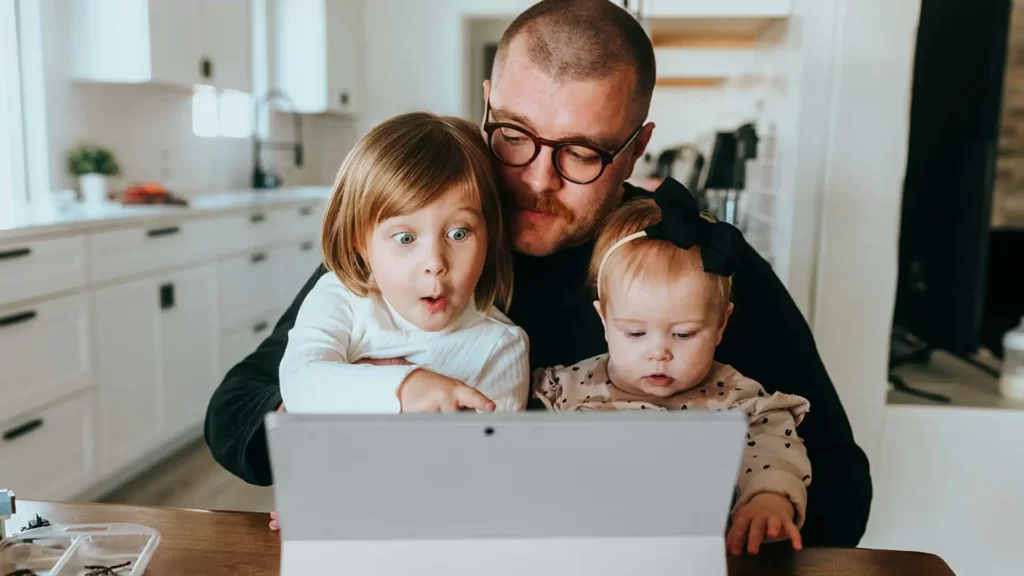
3. Co-using
In this approach, parents manage their children’s media use by engaging with them while they use media. By doing so, parents ensure that they can monitor their children’s media content and usage at all times.
Read Also: Anxiety in Children: How Can We Deal With It?
Other Important Aspects of Parental Mediation
Parents play an important role in guiding their children’s use of media; specifically:
- Categorization that helps children distinguish between positive and negative content.
- Parental validation in helping children decide whether to accept or reject messages conveyed by media content.
- Supplementation, or efforts by parents to help children find additional information relevant to real life to balance out aspects of media content that may be disproportionate.
In this age of unlimited information, parents certainly need to use such methods to monitor their children’s activities when accessing information or content via digital devices.
Taking an emotional approach to children will certainly make it easier for parents to apply this parenting concept in their daily lives.
No Comment! Be the first one.