






Why Is Dolphin Parenting the Hottest Parenting Trend of 2026? Here Are the Benefits! – Lately, dolphin parenting has been a hot topic of conversation among parents. It’s no surprise, really, since this parenting style is believed to help children grow into more confident, independent individuals who still feel loved without having to live under pressure.
In 2026, as technology becomes more advanced, social media grows more influential, and academic demands at school increase, many families are beginning to move away from parenting styles that are either too strict or overly indulgent. Now, more and more parents are turning to dolphin parenting because it’s seen as a more balanced approach to help children face life’s challenges with a strong mindset.

What Is Dolphin Parenting?
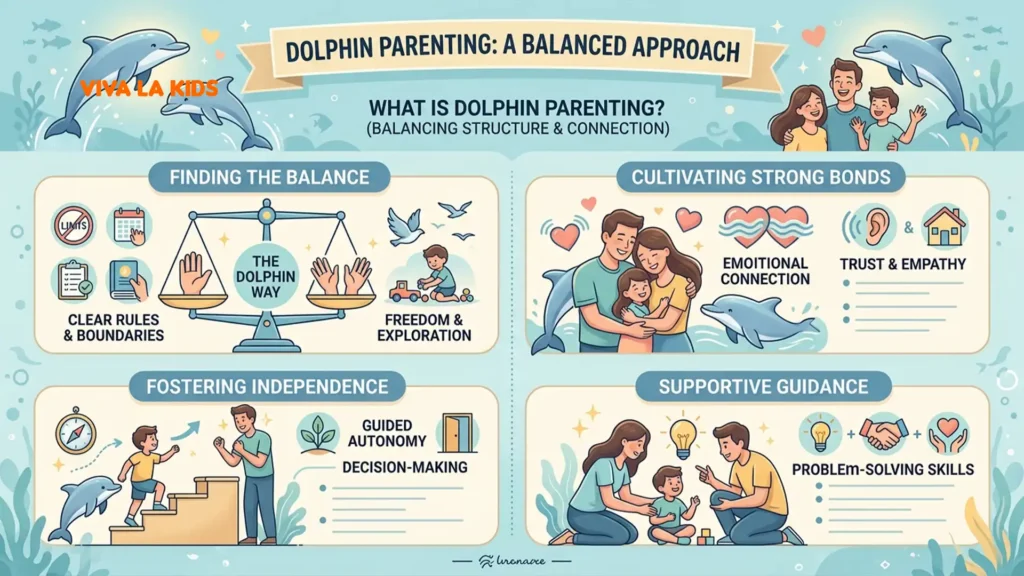
Dolphin parenting is a parenting style that combines affection, healthy communication, and clear boundaries. This concept was first introduced by a parenting expert from the United States as an alternative to tiger parenting—which tends to be strict—and jellyfish parenting—which is overly permissive.
As the name suggests, dolphins are known as intelligent, friendly animals that are capable of cooperating and protecting their group. These characteristics serve as the inspiration for building relationships between parents and children.
Through dolphin parenting, parents set rules but do not impose their will. Children are given the opportunity to learn how to make decisions, solve problems, and take responsibility for their choices.
How Parents Can Practice Dolphin Parenting at Home
And for parents who are interested in practicing dolphin parenting but aren’t sure where to start, just follow the steps below:
1. Be a Good Listener
In this parenting style, parents don’t immediately judge their child when he or she makes a mistake. Instead, they listen to the child’s side of the story first before offering a solution. This simple approach makes the child feel valued and comfortable opening up.
2. Providing Responsible Freedom
Freedom doesn’t mean letting children do whatever they want. Parents still set rules, but children are given the space to make choices appropriate for their age. For example, choosing a hobby, setting a study schedule, or managing their playtime.
3. Teaching Children to Solve Problems
When a child faces a challenge, parents don’t immediately step in. Instead, they guide the child to find solutions on their own so that their thinking skills and self-confidence continue to grow.
4. Offer Appreciation, Not Pressure
Instead of scolding their children for poor grades, parents focus more on recognizing the effort their children have put in. This approach helps children feel more motivated to improve without fear of failure.
5. Establish Two-Way Communication
Set aside time every day to talk with your child. Ask them about their day, what makes them happy, and what challenges they’re facing. Simple communication like this can help build a closer bond.
6. Set Consistent Rules
Rules are still necessary so that children understand boundaries. However, explain the reasons behind these rules so that children can accept them more easily without feeling forced.
7. Let Children Learn from Their Mistakes
Mistakes are part of the learning process. As long as they remain within safe limits, let your child experience the consequences of their actions so they can learn to take responsibility.
8. Avoid Comparing Children
Every child has different abilities. Comparing them to their siblings or friends can actually lower their self-confidence. Focus on your child’s development rather than their achievements.
9. Be a Good Example
Children are excellent imitators. If parents are able to control their emotions, respect others, and be honest, children will find it easier to adopt those habits.
See Also: An Important Secret! Parenting Tips for Raising the Beta Generation
Expert Opinions on Dolphin Parenting
As reported by Psychology Today, Shimi Kang, M.D., explains in her article that the Dolphin Approach is a parenting style characterized by a firm yet flexible attitude.
This approach places great emphasis on a healthy balance between setting rules (structure) and granting children independence. The main goal of this parenting style is to raise children who are physically and mentally healthy, happy, and self-motivated.
The hope is that children will grow up to be resilient in the face of a constantly changing world without feeling overly stressed or micromanaged.
No Comment! Be the first one.